
Last updated November 15, 2026
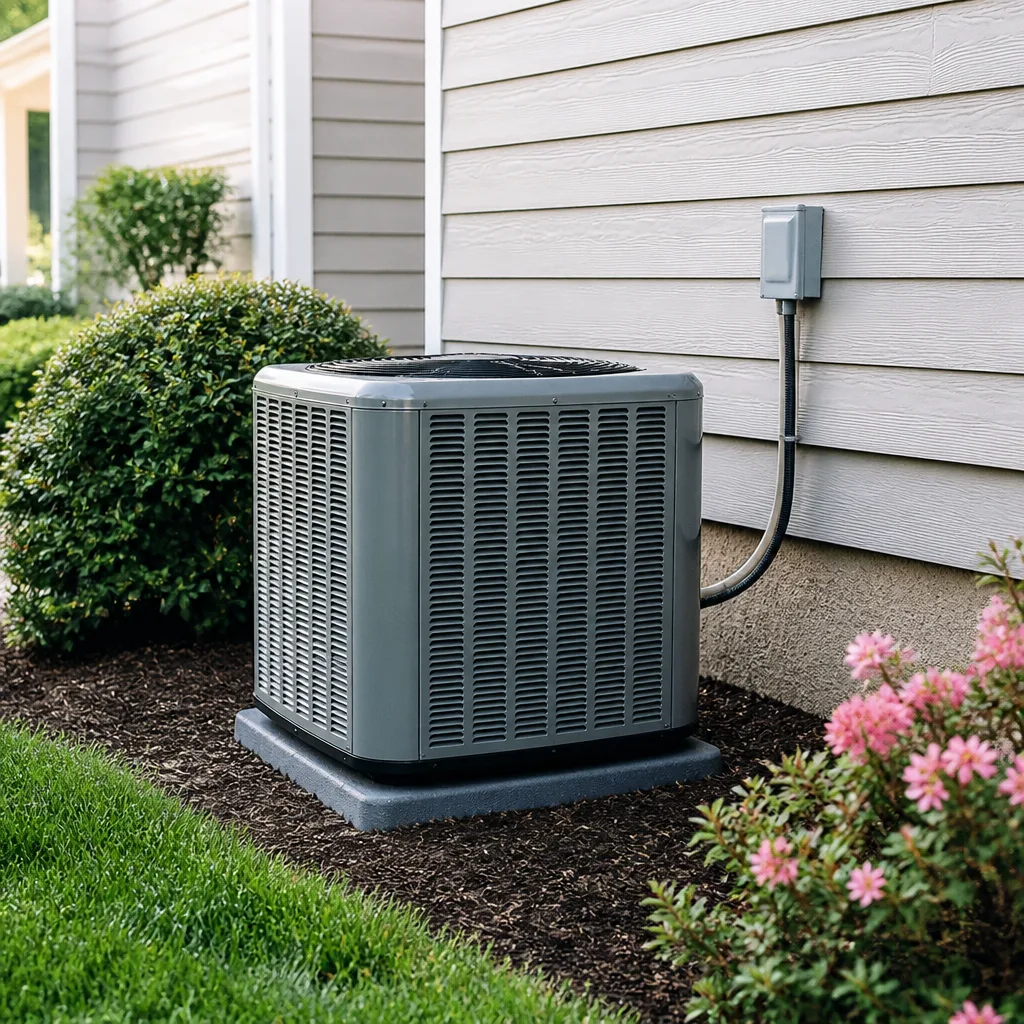 AC repair
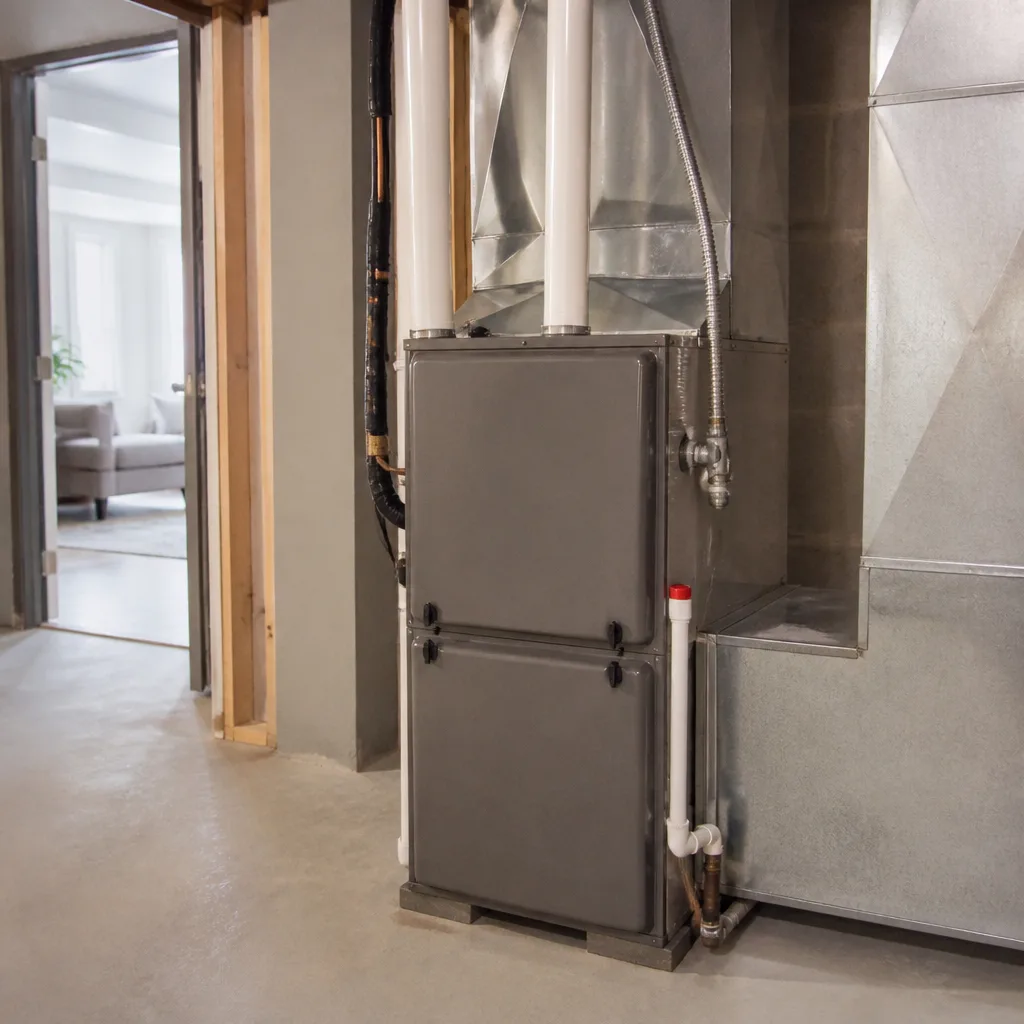 Furnace & heating
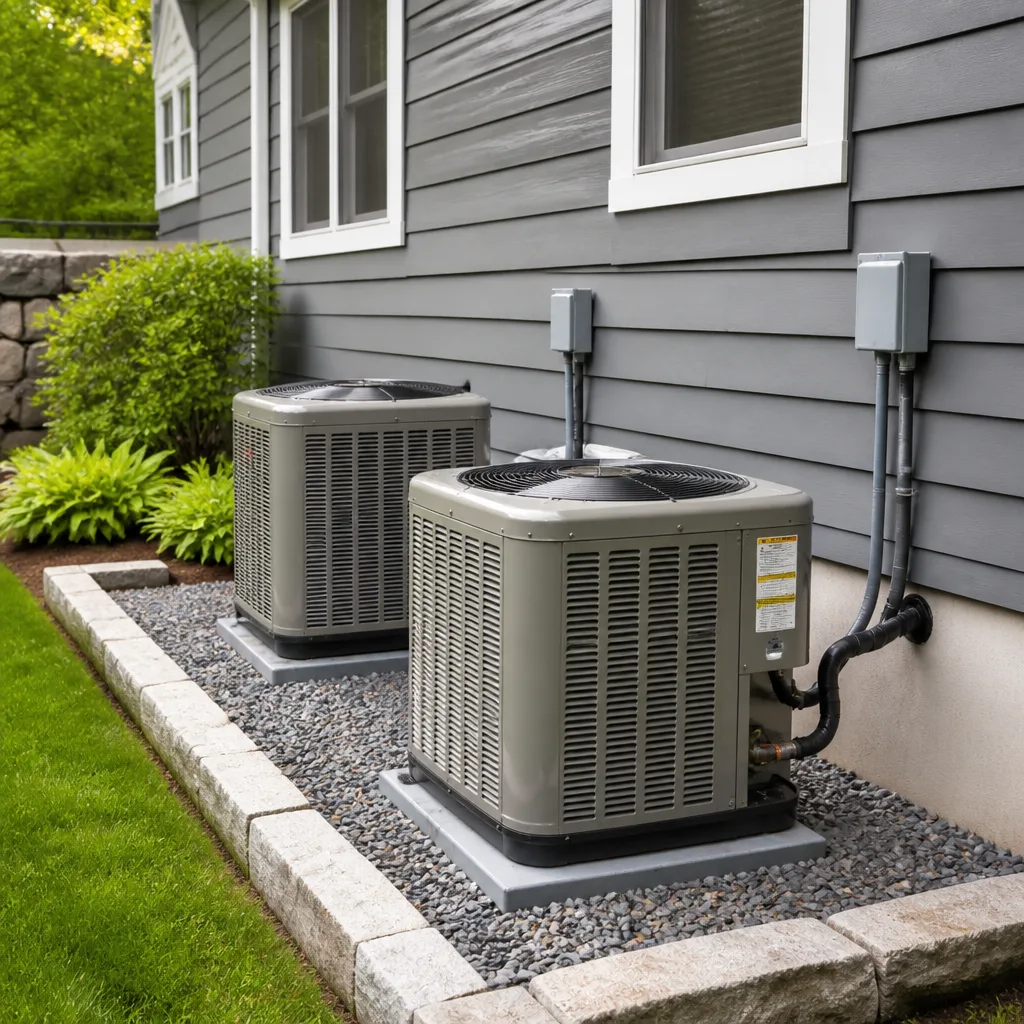 Heat pumps
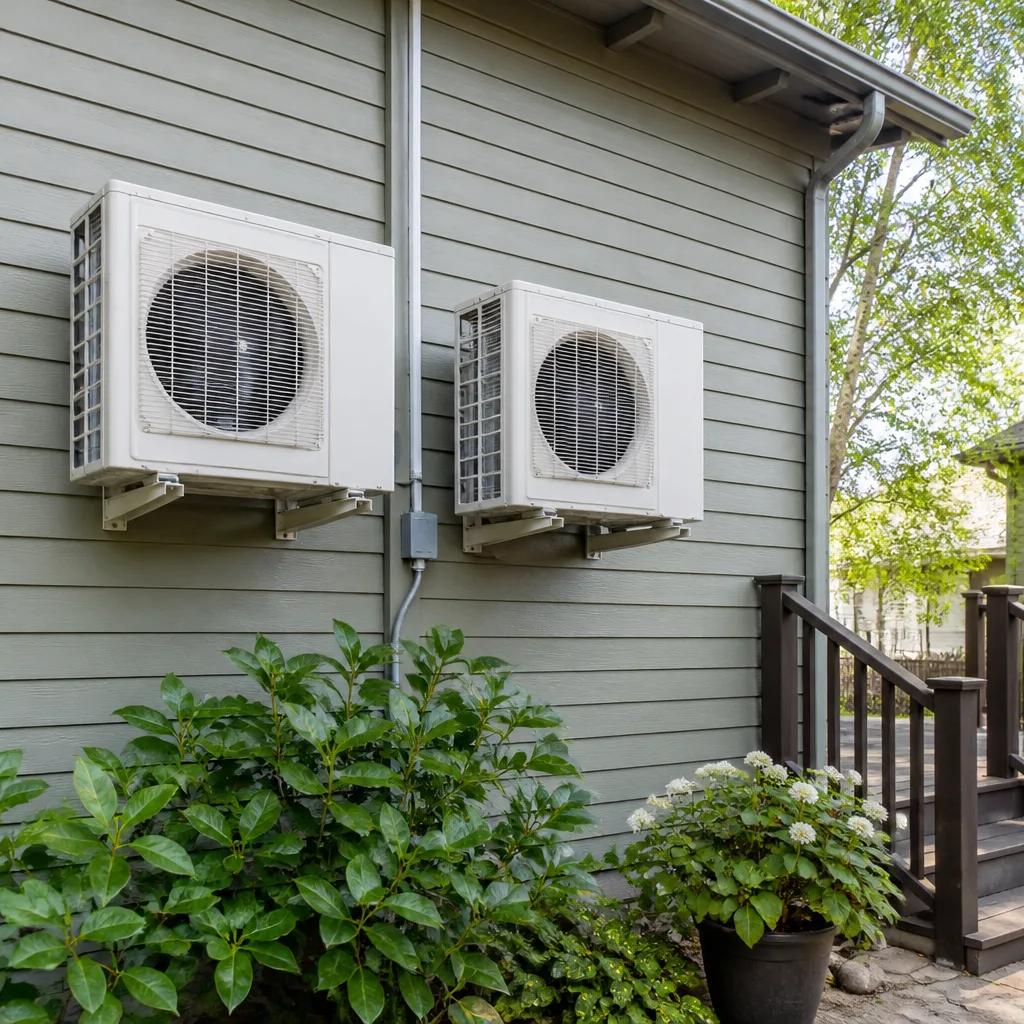 Ductless mini splits
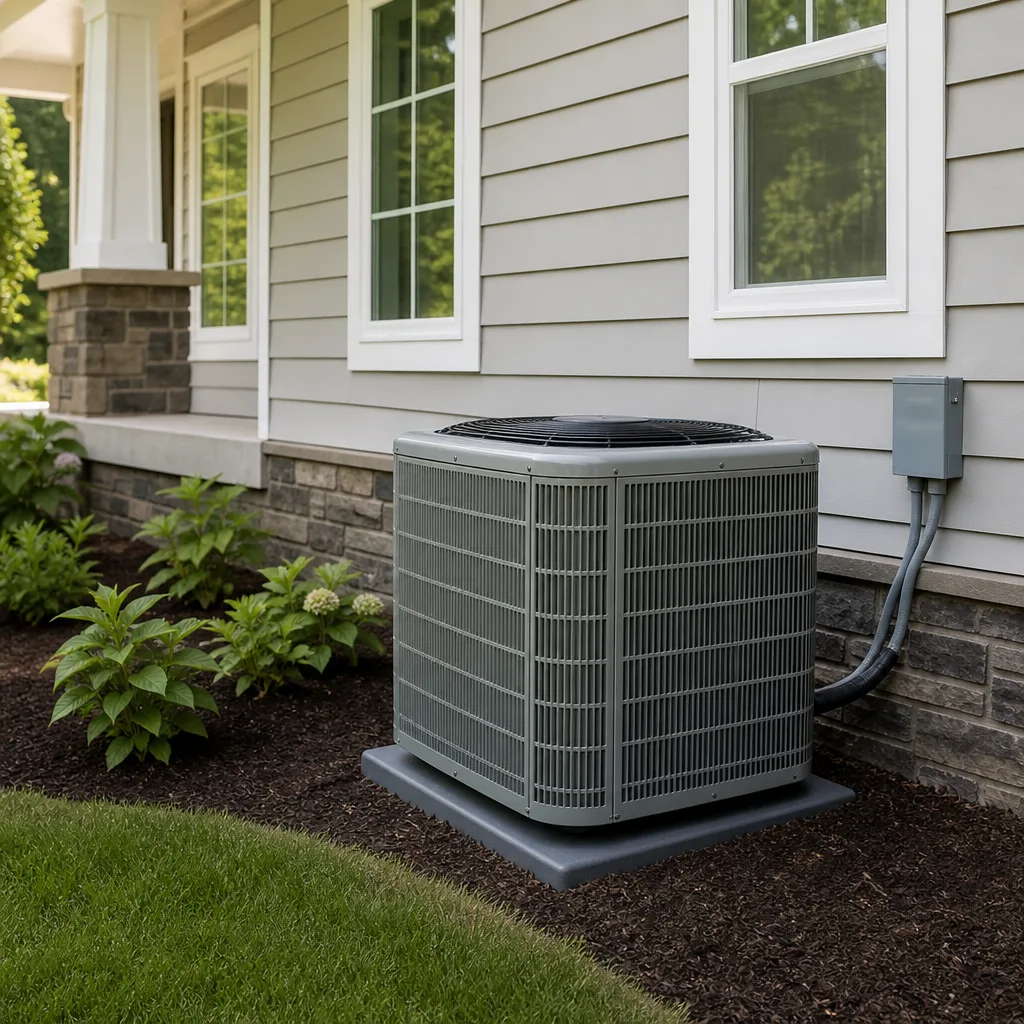 Carrier
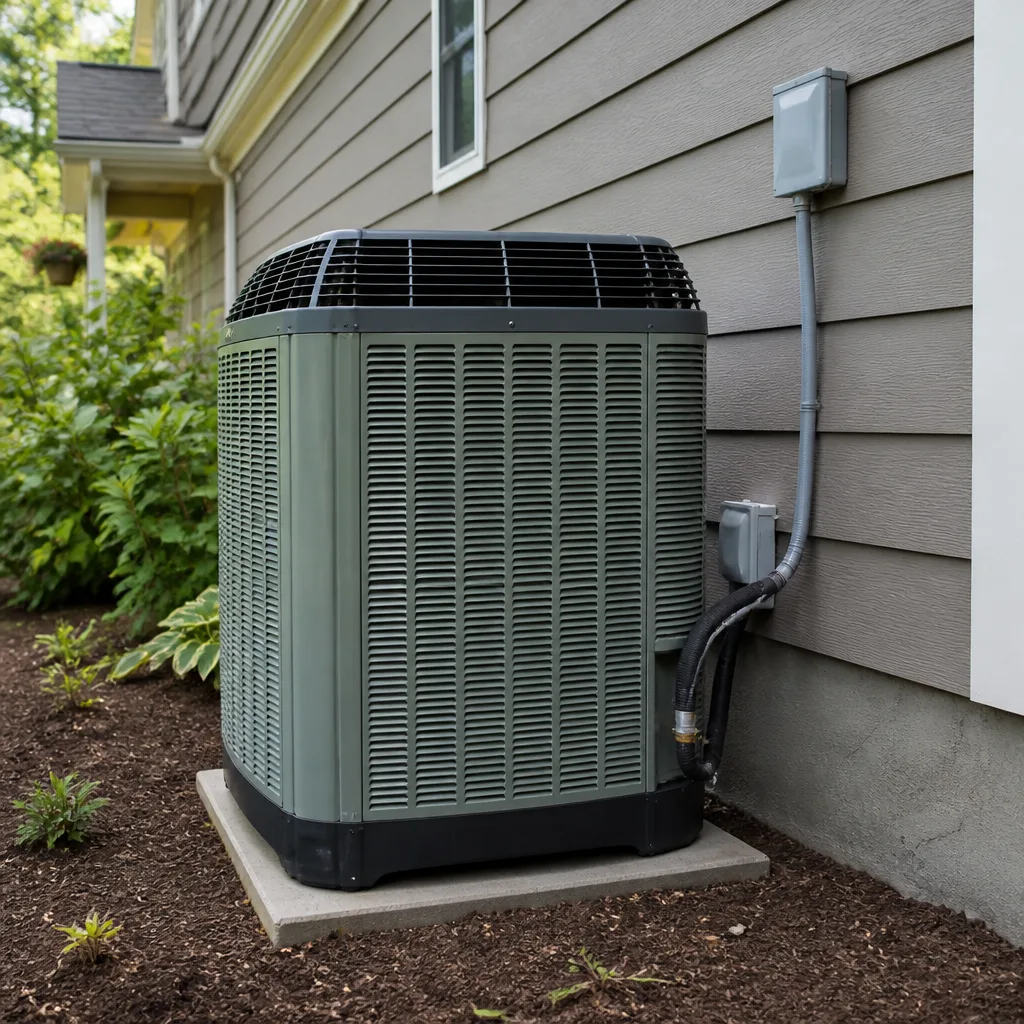 Trane
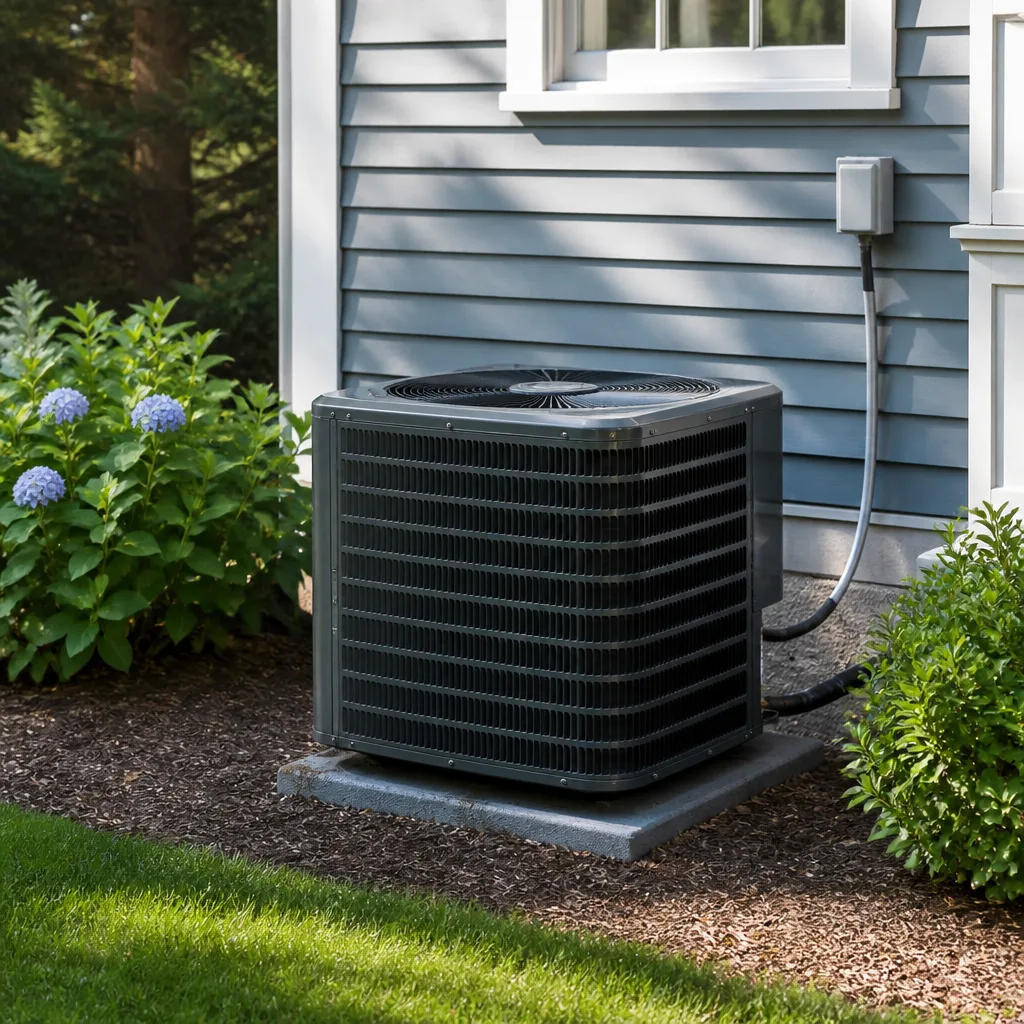 Goodman
Seasonal tune-up and full diagnostic on your Carrier, Trane, or Goodman system - readings shown to you before any repair is proposed
Diagnosis first, numbers second - you approve the repair price before a single part goes in.
Get your free estimateHVAC Emergency Preparedness Guide for Hollywood Homes
Most homeowners treat a failed air conditioner as a scheduling problem. In Hollywood, it’s a heat problem first. On an August afternoon, a closed home with no cooling can push past 95°F indoors within a few hours, and for an elderly parent, a newborn, or anyone on medication that affects how the body handles heat, that window is a medical one. The counterintuitive part: the panic decisions made in that window, like ripping open a system or restarting a storm-flooded unit, are what turn a repair into a replacement. This guide covers what to check before you call, how to buy safe cooling time, what to tell a dispatcher, and how to prepare before the season starts.
Quick Answer
If your AC fails in Hollywood, first check the breaker, the condensate float switch, and your thermostat settings, since those three resolve roughly one in five “system down” calls without a technician. If that doesn’t restore cooling, get vulnerable household members to a cool room and call (833) 854-7099. We answer 24/7, and dispatch runs from 7am to 7pm. Never restart a unit that took storm or water damage until it has been inspected.
Styles & brands we work with
- AC repair
- Furnace & heating
- Heat pumps
- Ductless mini splits
- Carrier
- Trane
- Goodman
Table of Contents
- Why an HVAC Failure in Hollywood Is a Health Event, Not a Comfort Problem
- The First Three Things to Check Before You Call
- How to Buy Safe Cooling Time While You Wait
- What to Tell the Dispatcher So Your Call Gets Triaged Right
- Hurricane Aftermath: Why You Inspect Before You Restart
- Building Your Pre-Season Emergency File
- Signs You Should Never Diagnose Yourself
- Common Mistakes to Avoid
Why an HVAC Failure in Hollywood Is a Health Event, Not a Comfort Problem
South Florida heat doesn’t wait for a convenient appointment. Hollywood sits in a humid subtropical climate, which means summer afternoons combine high air temperature with high moisture, and humidity is what makes heat genuinely dangerous. Your body cools itself by sweating, and that mechanism stops working when the air is already saturated. A home that loses cooling in July doesn’t just get warm. It gets humid, and humid heat is the kind that overwhelms people who can’t easily regulate their own temperature.
The people most at risk in a Hollywood home are usually the ones least likely to complain about it:
- Older adults, whose thirst response and sweat response both decline with age
- Infants and young children, who heat up faster than adults do
- Anyone with heart or lung conditions, or on medications that affect hydration or sweating
- People who live alone and may not recognize their own symptoms
That’s the reason we treat a cooling failure as time-sensitive rather than a routine booking. It’s also why the gap between “check the basics” and “call for help” should be short. You’re not being dramatic by calling the same day. You’re matching your response to the actual risk. Homes near the beachside blocks and older inland neighborhoods in Hollywood often have less insulation and older windows than newer construction, which means indoor temperatures climb faster than the homeowner expects. We work on equipment from Carrier, Trane, and Bryant, among others, so when a technician does arrive, the diagnosis starts from the actual model rather than a guess.
The First Three Things to Check Before You Call
Roughly one in five “the AC is dead” calls we handle resolves without any repair at all. Before you assume the worst, check these three things in order. They take about five minutes, they’re safe to do yourself, and they’ll either restore cooling or give the dispatcher useful information.
- The circuit breaker. Find your electrical panel and look for a tripped breaker on the air handler or condenser circuit. A breaker that’s sitting in the middle rather than fully on has tripped. Flip it fully off, then fully on. If it trips again immediately, stop and call a professional. A breaker that keeps tripping is telling you something is wrong, and resetting it repeatedly is how people cause real damage.
- The condensate float switch. Air conditioners pull moisture out of the air, and that water has to drain somewhere. Most systems have a float switch in the drain pan or line that shuts the unit off when water backs up, which protects your ceiling and floors. If the pan is full or the switch has tripped, the system is doing its job by shutting down. Clear the visible water if you can do so safely, and call for service, because a backed-up drain needs to be cleared properly.
- Thermostat settings. Check that the thermostat is set to cool, not heat or fan-only, and that the set temperature is below the current room temperature. Check the batteries if it’s a battery model. A surprising number of “failures” are a thermostat in the wrong mode or a schedule that got changed by accident.
If all three check out and the system still won’t cool, that’s your cue to call. Don’t open panels, don’t poke at wiring, and don’t try to reset anything inside the outdoor unit. Call (833) 854-7099. We answer 24/7 and dispatch from 7am to 7pm.
How to Buy Safe Cooling Time While You Wait
Once you’ve called, the job is to keep the household safe until a technician arrives. You don’t need a perfect solution. You need to lower the risk for the people who are most vulnerable, and you need to do it without making the repair worse.
Here’s the order that works:
- Move vulnerable people to the coolest room in the home. That’s usually a ground-floor room away from west-facing walls, or any room with a window unit. Close the door and keep it closed.
- Stage window units where they help most. A single window unit in one bedroom won’t cool the whole house, but it can create a safe room for an elderly resident or an infant. Prioritize sleeping rooms over living spaces.
- Manage humidity, not just temperature. Run bathroom and kitchen exhaust fans after showers and cooking. Keep the blinds and curtains closed on sun-facing windows. Don’t open windows during the hottest part of the day, because bringing in humid outdoor air makes the indoor heat feel worse, not better.
- Use fans to move air, not to fake cooling. Ceiling and box fans help your body shed heat, but above roughly 95°F indoor air, fans stop helping and can add heat stress. If the room is that hot and you can’t cool it, move people out of the home rather than relying on fans.
- Hydrate deliberately. Cool water, more often than thirst suggests. Avoid alcohol and heavy meals, which add to the body’s heat load.
One thing not to do: don’t prop open the outdoor unit’s panel or hose down the condenser to “help it cool.” Both can cause electrical or mechanical damage. The system is either working or it isn’t, and a technician needs it intact to diagnose it.
What to Tell the Dispatcher So Your Call Gets Triaged Right
When you call, the person on the phone is deciding how to route your job. The more useful information you give in the first minute, the better the match between what you need and what shows up. Have these details ready before you dial.
- The symptoms, specifically. “No cool air at all,” “cool air but weak airflow,” “the outdoor unit is humming but the fan isn’t spinning,” “there’s water around the indoor unit,” “the breaker keeps tripping.” Each of these points to a different likely cause and a different urgency.
- Whether anything is running at all. Is the indoor blower moving air? Is the outdoor unit making noise? Is the thermostat screen blank?
- The equipment age and brand. A 15-year-old unit with a failed compressor is a very different conversation than a 4-year-old Carrier with a bad capacitor.
- What you’ve already checked. Tell them you checked the breaker, the float switch, and the thermostat. That saves a step and tells the technician what’s been ruled out.
- Anyone in the home with a health risk. Say so plainly. An infant, an elderly resident, or someone with a heart condition changes how a job should be scheduled.
- Your address and any access details. Gate codes, pets, a unit on the roof versus the ground.
If you’re unsure what you’re hearing or seeing, describe it in plain words. “It sounds like it’s trying to start but clicking off” is genuinely useful. Our technicians have up to 15 years of experience, and much of the early diagnosis happens on the phone before anyone arrives. If you want to understand how AC repair actually works once the technician is on site, that page walks through the process.
Hurricane Aftermath: Why You Inspect Before You Restart
After a storm passes through Hollywood, the instinct is to get the house cool again as fast as possible. Resist that instinct for one important step: inspect first. A flooded or damaged system that gets powered up can fail in ways that are more expensive than the original damage, and in the worst case it’s dangerous to the person standing next to it.
Before you touch the thermostat, look for these signs. Any of them means do not start the system, and call for an inspection:
- Standing water inside the air handler cabinet, the drain pan, or around the outdoor unit
- Visible scorching, burn marks, or a smell of burnt insulation near electrical components
- Debris lodged in or against the outdoor condenser, or a bent or blocked fan
- Pulled or disconnected wiring, a loose panel, or a unit that has shifted off its pad
- Water damage to the electrical panel that feeds the unit
If the outdoor unit sat in floodwater, it needs to dry out completely and be inspected before power is restored, because moisture inside electrical components is a shock and fire risk. That’s not a judgment call anyone should make from the driveway. Once an inspection clears the system, you’ll want to check the drain line and clear any debris from around the condenser, since storm debris blocks airflow and stresses the compressor. If the system needs major work rather than a repair, we can walk you through AC installation so you know what replacement involves and what it costs before you commit.
Building Your Pre-Season Emergency File
The single best thing you can do for a future HVAC emergency is prepare for it now, while nothing is wrong. A technician who has your equipment details before arriving can bring the right parts and know what to expect. Keep a file, digital or paper, with the following.
- Equipment model and serial numbers. Both the indoor air handler and the outdoor condenser. These are on metal nameplates on the units themselves. Photograph them. The serial number tells a technician the manufacture date, which matters when deciding repair versus replacement.
- Your refrigerant type. It’s on the nameplate of the outdoor unit. Knowing whether the system uses an older refrigerant or a current one tells the technician what’s even possible before they arrive.
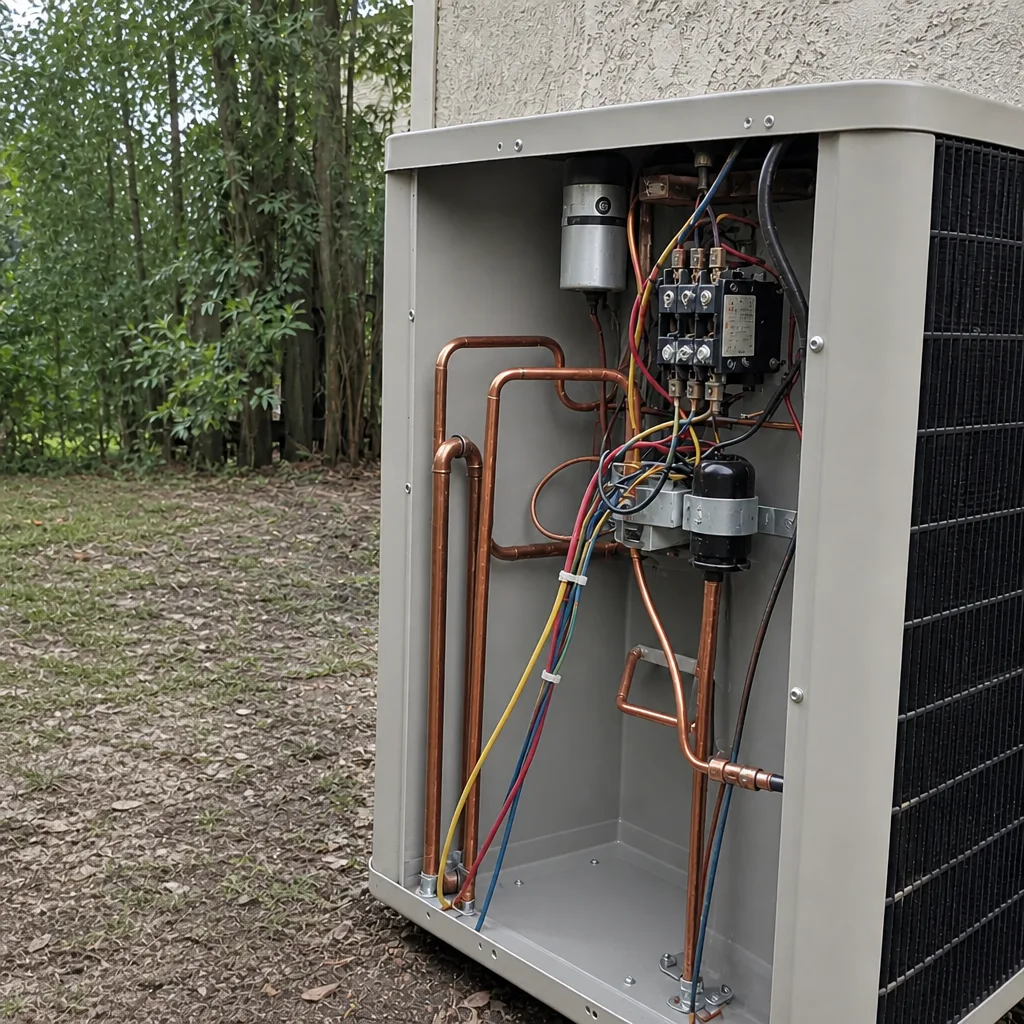
- A photo of the contactor and the electrical panel. Open the outdoor unit’s electrical compartment only if you can do so safely with the power off, and photograph the components inside. If that feels risky, skip it. A photo of the panel labeling and the thermostat wiring is enough.
- Your filter size and the last change date. A clogged filter is one of the most common causes of a system that seems to be failing. Note the size so replacements are quick.
- The service history. Dates, what was found, what was repaired. If a technician tells you the same part failed twice, that history is what turns “replace the part again” into “find out why.”
Keep the file where you’ll find it in a hurry, not buried in a drawer. When you call, you can read the model and serial numbers off directly. That’s the difference between a prepared visit and a second trip with parts.
Signs You Should Never Diagnose Yourself
Some HVAC problems are safe to check from the outside. Others aren’t. Air conditioning involves line voltage, capacitors that hold a charge after power is cut, and refrigerant under pressure. We’d rather you call than open a panel.
Call for professional service immediately if you notice any of these:
- Burning smells or smoke from the indoor or outdoor unit, or a hot plastic smell near the thermostat
- Sparks, buzzing, or a breaker that trips repeatedly after a reset
- Water pooling around the indoor unit or staining on the ceiling below it
- Ice forming on the indoor coil or the refrigerant lines, which can indicate a refrigerant or airflow problem
- A hissing or bubbling sound near the refrigerant lines, which may indicate a leak
- Any electrical smell after storm flooding near the disconnects or panel
None of these are things to diagnose with a screwdriver and a phone video. They’re things to hand to a trained technician. That’s not caution for its own sake; it’s the difference between a repair and a hazard.
Common Mistakes to Avoid
- Waiting too long to protect vulnerable household members. The first move in a heat emergency is moving people to a cool room, not troubleshooting the system. Do both, but do the safety part first.
- Resetting a tripping breaker over and over. A breaker that trips repeatedly is reporting a fault. Repeated resets can damage the compressor. One reset, then call.
- Running the system with a flooded drain pan. The float switch shut it down for a reason. Ignoring it can cause water damage to ceilings and floors that costs far more than the drain line fix.
- Restarting a unit after a storm without inspecting it. Water and electricity don’t mix, and flood-damaged components need to dry and be inspected before power returns. This is the single most expensive mistake we see after major storms in Hollywood.
- Replacing the whole system because a technician said “it’s old.” Age alone doesn’t decide whether to repair or replace. A 14-year-old Bryant with a bad capacitor is a repair. Ask for the diagnosis, not just the recommendation. That’s why we diagnose first and recommend second.
- Using box fans as a substitute for cooling in high heat. Above roughly 95°F indoor air, fans can add heat stress rather than relieve it. Move people out rather than relying on airflow alone.
- Opening the outdoor unit to “see what’s wrong.” Capacitors hold a charge after the power is off, and the wiring is live. Leave it closed and let a technician take the panel off.
See the difference
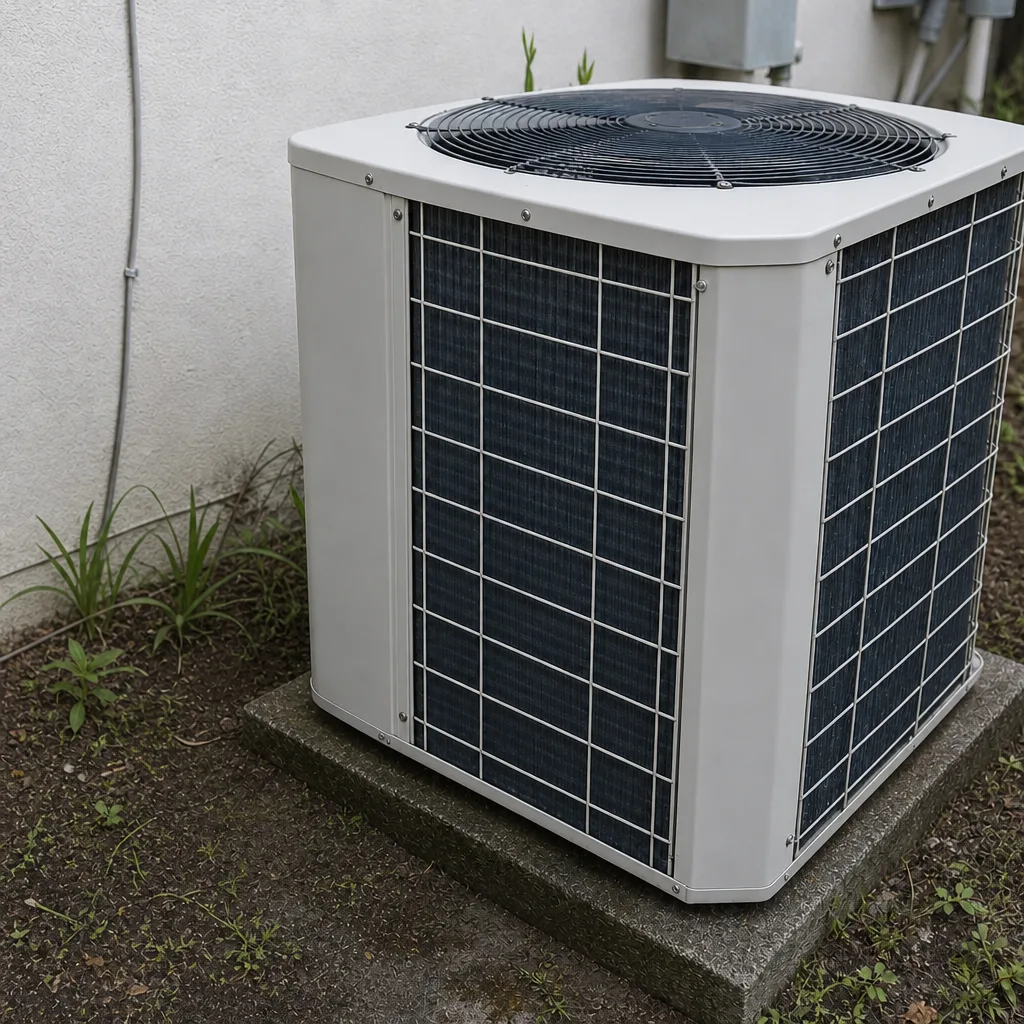
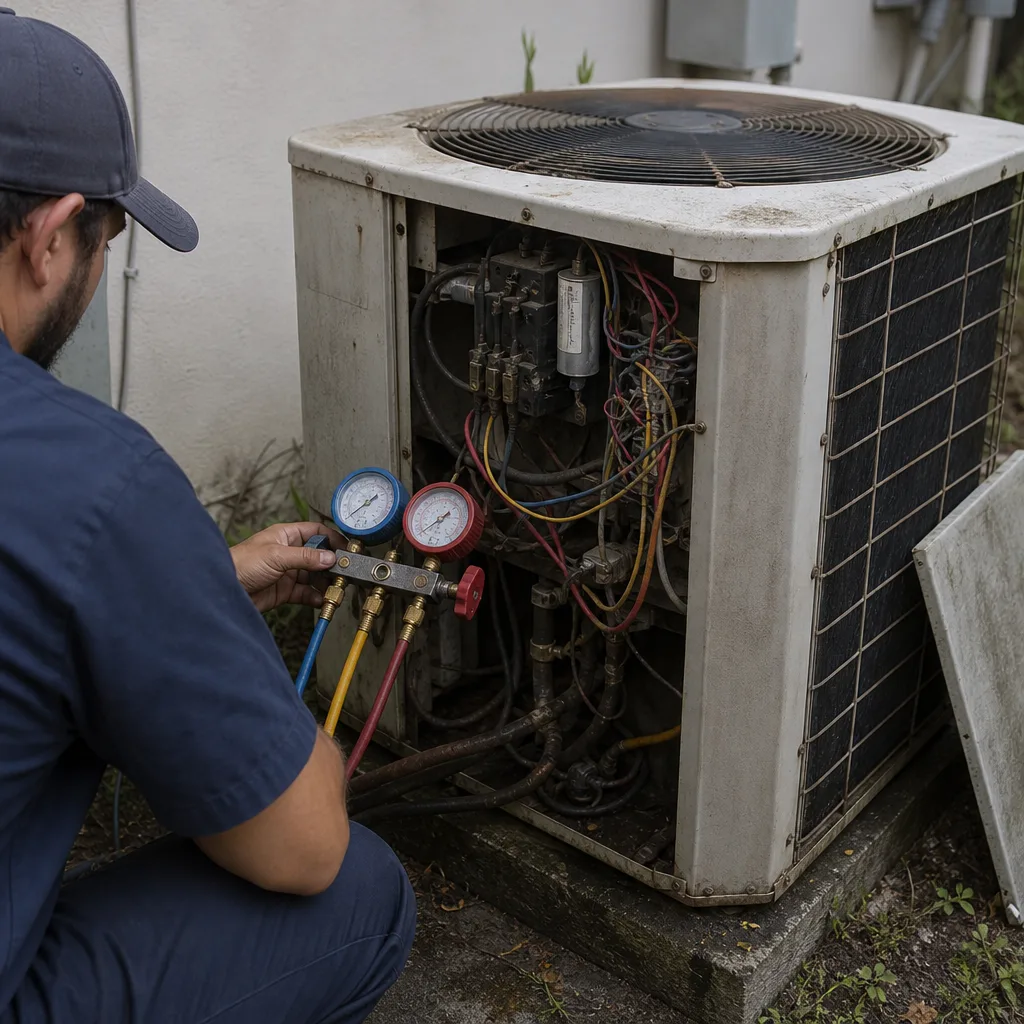 Before
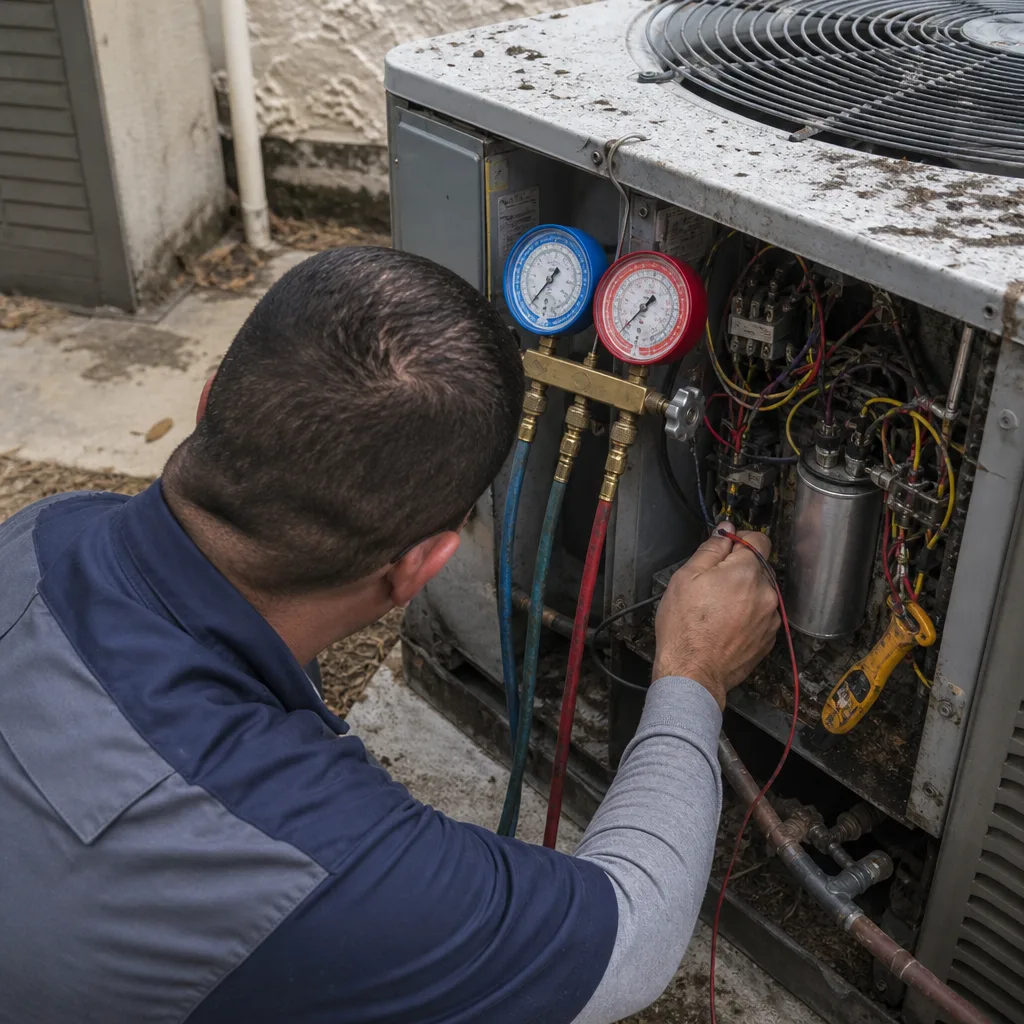
 After
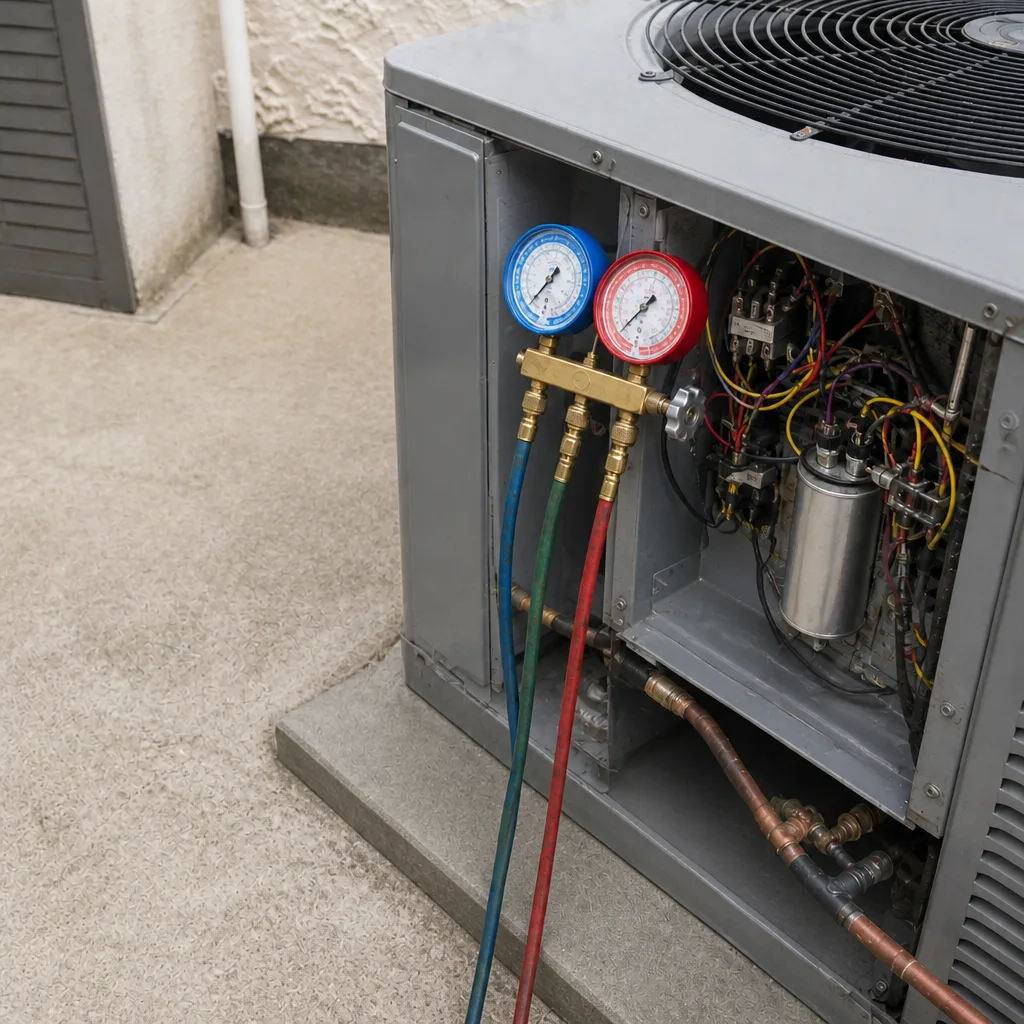
 Before
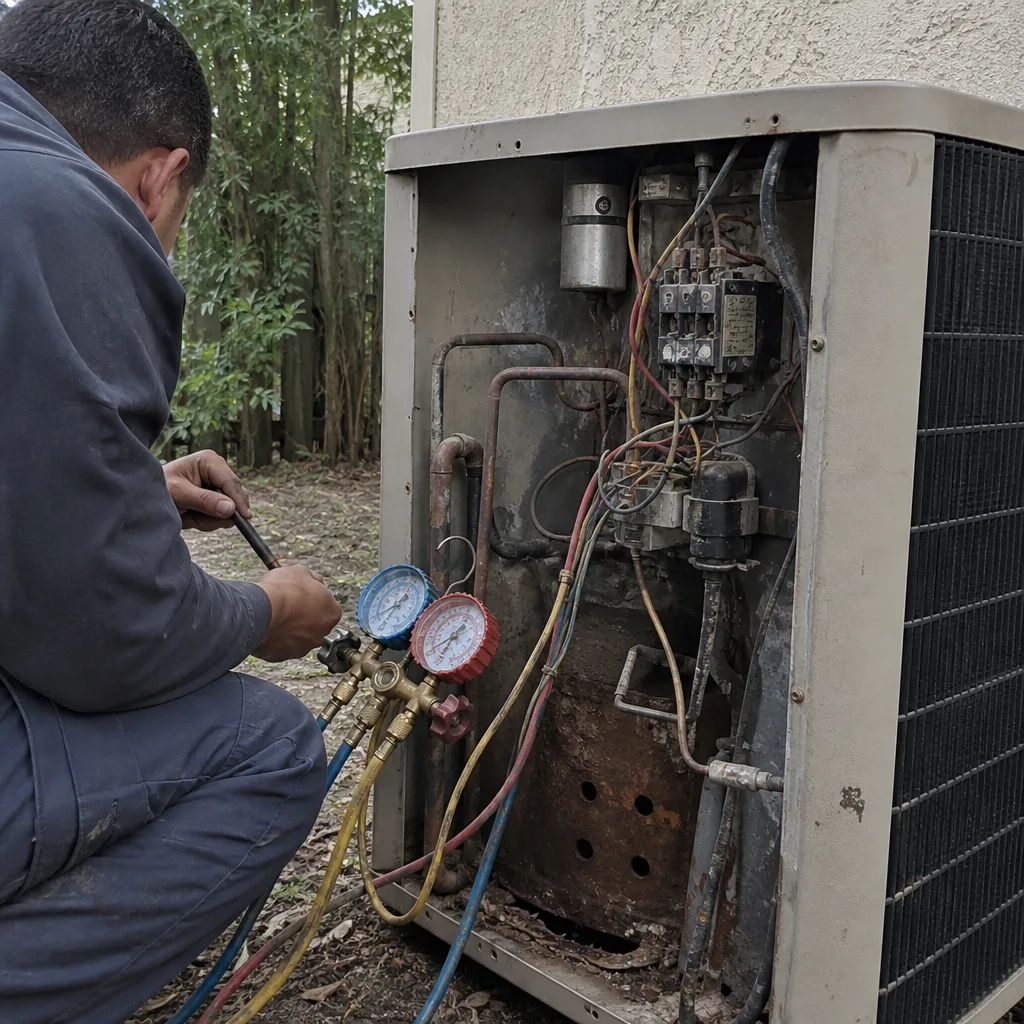
 After
 Before
 After
When to Call a Professional
Call for professional service when the breaker, float switch, and thermostat checks don’t restore cooling; when you see water, ice, smoke, sparks, or a burning smell; after any storm flooding near the equipment; or any time there’s a vulnerable person in the home and the indoor temperature is climbing. Those are the situations where waiting costs more, in money or in health, and where a fast diagnosis protects the equipment. As a multi-brand shop, we work on equipment from nine of the most widely installed brands in North America, including American Standard and Trane, which means the technician who arrives is likely familiar with your equipment already. Ashton AC Repair offers free estimates in Hollywood. Call (833) 854-7099. We answer 24/7, with fast dispatch from 7am to 7pm, Sunday through Friday. For a plain overview of who we are and what we work on, see Ashton AC Repair.
Frequently Asked Questions
Check the breaker, the condensate float switch, and the thermostat settings before anything else, because those three cause about one in five “system down” calls. If they check out and the system still won’t cool, move any vulnerable household members to a cool room and call for service the same day. Call (833) 854-7099. We answer 24/7, with fast dispatch from 7am to 7pm, and estimates are free.
Indoor temperatures in a closed Hollywood home can climb above 95°F within roughly four hours on a summer afternoon, and humidity rises along with it, which is what makes the heat dangerous. The exact number depends on insulation, window type, and sun exposure, but the timeline is short enough that waiting until evening to act on a failed system isn’t a safe default when someone vulnerable lives there.
Only after you’ve inspected it for water, debris, and damage, and only if it shows none. If the outdoor unit sat in floodwater or you see scorching, loose wiring, or standing water in the cabinet, do not start it. Have it inspected first. Call (833) 854-7099 to schedule an inspection, and we’ll tell you what we find before recommending any repair.
Yes, if it’s placed in one closed room and the room is where the vulnerable person stays. A single window unit can create a safe room even when the central system is down. Prioritize the sleeping room or a ground-floor room away from west-facing walls, keep the door closed, and manage humidity with exhaust fans and closed blinds. If the room still won’t cool, move the person out rather than relying on fans in high heat.
Have your equipment’s model and serial numbers, the refrigerant type from the outdoor nameplate, the specific symptoms, the equipment age, and a note of what you’ve already checked. Also tell the dispatcher if anyone in the home has a health risk. That information gets your call triaged correctly and can mean the technician arrives with the right parts instead of needing a second trip. Call (833) 854-7099 when you’re ready.
The honest answer depends on the diagnosis, not on the age of the unit alone. A failed capacitor, contactor, or blower motor on an otherwise sound system is usually a repair. A failed compressor on a system near the end of its service life is a different conversation. We diagnose first and recommend second, which means you get the finding before the recommendation. If replacement does turn out to be the right call, we can talk through options across brands like Carrier and American Standard. Call (833) 854-7099 for a free estimate.
What should I do about the heat if a technician can’t arrive right away?
Create one cool room with a window unit, close it off, and put the most vulnerable person there. Run exhaust fans after showers and cooking, close blinds on sun-facing windows, and keep outdoor air out during the hottest part of the day. Drink cool water more often than thirst suggests. If the indoor temperature keeps climbing and you can’t cool any room, move vulnerable people to another location rather than waiting. Then call (833) 854-7099 so we can get you scheduled.
The Bottom Line
An HVAC failure in Hollywood is a heat emergency with a short fuse, and the decisions made in the first few hours matter more than the ones made later. Check the breaker, the float switch, and the thermostat first, because they resolve a meaningful share of failures on their own. Then protect the people at risk with a cool room and humidity control. Call with your model numbers and symptoms so the job gets triaged right. And never restart a storm-damaged unit without an inspection. Prepare your emergency file before the season, and the next failure becomes a repair instead of a crisis. For service across Hollywood, call (833) 854-7099 for a free estimate.
Written by the team at Ashton AC Repair.